
Mon to Sun : 9AM To 8PM
Orthodontic treatment has evolved significantly over the past few decades. While traditional braces have been the standard method for correcting misaligned teeth for many years, modern dentistry now offers an alternative: clear aligners.
Both treatments are effective methods of straightening teeth, but they differ in appearance, comfort, lifestyle impact, and treatment approach. This guide explains the differences so you can make an informed decision about your orthodontic treatment.
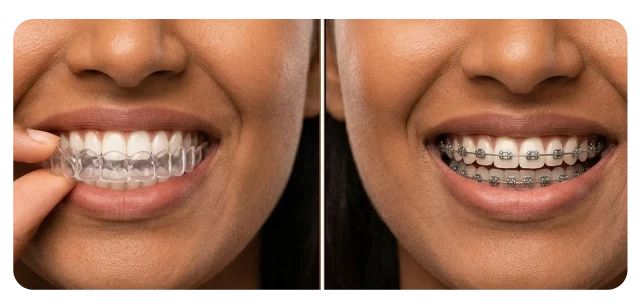
For decades, orthodontic treatment meant one thing: braces with metal brackets and wires. Today, however, clear aligners provide a discreet alternative that many adults prefer.
Traditional braces remain a highly reliable method for correcting severe orthodontic problems. However, invisible aligners have grown rapidly in popularity because they offer a more comfortable and aesthetically pleasing way to straighten teeth.
In Sri Lanka, both treatments are widely available, and the right choice depends on your dental condition, lifestyle, and treatment goals.
Traditional braces use a system of brackets attached to the teeth and connected with orthodontic wires. These wires are periodically adjusted by the dentist to gradually move the teeth into proper alignment.
The process works through controlled orthodontic force applied to the teeth over time. As the wire is tightened during periodic visits, the teeth gradually move into the desired position.
Because they are fixed appliances, braces continuously apply force without relying on patient compliance.
Braces remain one of the most predictable orthodontic treatments, but they also come with certain limitations.
Ceramic braces offer a more aesthetic version of traditional braces by using tooth-colored brackets, but they remain visible compared with aligners.
Clear aligners represent a newer approach to orthodontics that has gained rapid popularity worldwide.
Instead of brackets and wires, clear aligners use a series of transparent trays designed to gradually move teeth into alignment.
Each aligner tray is custom-made based on digital treatment planning and is worn for approximately 10–14 days before switching to the next tray.
In Sri Lanka, clear aligners are increasingly chosen by adults, professionals, and university students who prefer a discreet orthodontic treatment option.
Clear aligners differ from braces in several important ways.
Unlike braces, aligners are:
Digital orthodontic planning allows dentists to simulate tooth movement before treatment begins, improving precision and predictability.
Patients typically wear aligners 20–22 hours per day, removing them only for eating and cleaning.
Understanding the differences between these two treatments can help patients choose the option that best suits their lifestyle.
One of the most noticeable differences between braces and aligners is their appearance.
Traditional braces use visible brackets and wires attached to the teeth. Even ceramic braces remain somewhat noticeable.
Clear aligners, on the other hand, are virtually invisible when worn. Most people will not notice them during conversation.
For adults and professionals who prefer a discreet orthodontic solution, aligners often provide a significant advantage.
Braces can sometimes cause irritation because metal wires and brackets may rub against the cheeks and lips.
Clear aligners are made from smooth medical-grade plastic, which generally causes less irritation.
Patients may still feel mild pressure when switching to a new aligner tray, but this typically subsides within a few days.
Because aligners are removable, they also provide greater flexibility during daily activities.
Dietary restrictions are common with traditional braces.
Patients must avoid foods that can damage brackets or wires, such as:
With clear aligners, patients simply remove the trays before eating. This means there are no major dietary restrictions.
Oral hygiene is also easier with aligners because patients can brush and floss normally without navigating around brackets.
Treatment duration varies depending on the complexity of the orthodontic problem.
Traditional braces often require frequent adjustment visits, typically every 4–6 weeks.
Clear aligners are planned digitally, which may reduce the number of in-clinic adjustments. Some visits are only needed to monitor progress.
Many aligner treatments are completed within 6–18 months, although this varies depending on the case.
In Sri Lanka, orthodontic treatment costs vary depending on complexity and treatment method.
Typical price ranges include:
| Treatment Type | Typical Cost Range (Sri Lanka) |
|---|---|
| Metal Braces | LKR 120,000 – 250,000 |
| Ceramic Braces | LKR 180,000 – 300,000 |
| Clear Aligners | LKR 100,000 – 500,000 |
Clear aligners may appear more expensive in some cases due to the advanced technology used in treatment planning.
However, the lifestyle advantages of aligners—such as comfort, aesthetics, and convenience—often make them a preferred choice for adult patients.
Choosing the right clinic is just as important as choosing the right orthodontic treatment.
At Cayo Dental Hospital, clear aligner treatment combines digital orthodontic planning with modern dental technology.
Modern aligner planning begins with digital intraoral scanning, which captures a highly accurate 3D model of the patient’s teeth.
This digital model allows clinicians to design a treatment plan using advanced orthodontic software and artificial intelligence-assisted planning tools.
To improve accessibility, digital scanning centers allow patients to complete initial scans closer to their location.
This approach reduces travel time and allows patients from across Sri Lanka to access modern orthodontic care.
Patients can schedule consultations easily through online booking systems and secure digital payment platforms.
These systems simplify the process of starting orthodontic treatment and provide greater convenience for busy professionals.
For many mild to moderate alignment problems, clear aligners provide a comfortable and discreet solution.
However, severe orthodontic cases may still benefit from traditional braces or a combination of treatments.
A professional orthodontic consultation is the best way to determine the most appropriate option.
Clinical observations from Cayo Dental Hospital demonstrate predictable outcomes for clear aligner treatment when cases are properly selected.
| Clinical Indicator | Observed Value |
|---|---|
| Aligner cases analyzed | ~642 patients |
| Average patient age | ~29.8 years |
| Average aligners per arch | ~22 trays |
| Average total aligners per patient | ~38 trays |
| Average treatment duration | ~10.6 months |
| Cases requiring refinement aligners | ~54% |
| Treatment completion rate | ~93% |
These findings align with international orthodontic research showing that clear aligners are highly effective for mild to moderate orthodontic corrections when patients maintain proper wear compliance.
WhatsApp us