
24/7 Emergency Phone
24/7 Emergency Phone
Clear aligners have transformed orthodontic treatment by offering a modern way to straighten teeth without visible metal braces. Instead of brackets and wires, clear aligner therapy uses a series of transparent trays that gradually move teeth into their ideal position.
For many patients in Sri Lanka, the idea of aligner treatment is appealing, but they often ask:
This guide explains the step-by-step process of clear aligner treatment, from the first consultation to the final retainer phase, based on the treatment workflow used at Cayo Dental Hospital.
Clear aligner treatment follows a structured and digitally planned process designed to ensure precise and predictable tooth movement.
Unlike traditional braces, which are adjusted manually, aligner treatment relies heavily on digital planning, computer simulations, and advanced manufacturing technology.
The first step in aligner treatment is a comprehensive consultation.
During this visit, the dentist will:
Instead of traditional dental impressions, a 3D intraoral scanner is used to capture a detailed digital model of your teeth.
This scan allows clinicians to analyze tooth alignment and bite relationships with exceptional accuracy.
Once the digital scan is complete, specialized orthodontic software is used to create a customized treatment plan.
Using advanced digital simulation, the dentist can visualize:
Many patients are able to see a digital preview of their future smile before treatment even begins.
This technology helps ensure that tooth movement is carefully planned and predictable.
After the treatment plan is finalized, the aligner trays are manufactured.
Modern aligner systems often rely on high-precision 3D printing technology to produce the models used for fabricating the trays.
Each aligner tray is designed to apply a specific amount of pressure to selected teeth, gradually guiding them toward their ideal position.
The trays are made from medical-grade transparent resin, which provides:
Once the aligners are ready, the patient returns to the clinic to receive the first set.
During this appointment:
Attachments are small tooth-colored shapes bonded to the teeth that help the aligners apply more precise forces.
Clear aligner treatment works through a series of aligner trays.
Patients typically:
Each new tray gradually moves the teeth closer to their final position.
Treatment continues until all aligners in the series have been worn.
Many patients are curious about how aligners are able to move teeth without wires.
Orthodontic tooth movement occurs through a biological process called bone remodeling.
When gentle pressure is applied to a tooth:
Clear aligners apply controlled, continuous pressure, guiding teeth along the path planned by the orthodontic software.
This gradual movement ensures safe and predictable orthodontic results.
Modern orthodontic treatment should be accessible even for patients who live far from major cities.
To improve convenience, digital scanning services can be performed through distance centers, allowing patients to begin treatment closer to home.
Distance centers allow patients to:
This approach makes modern orthodontic care more accessible to patients across Sri Lanka.
Orthodontic treatment does not end once the final aligner is worn.
Regular monitoring during treatment ensures that teeth are moving according to the treatment plan.
Occasionally, additional refinement aligners may be required to achieve optimal results.
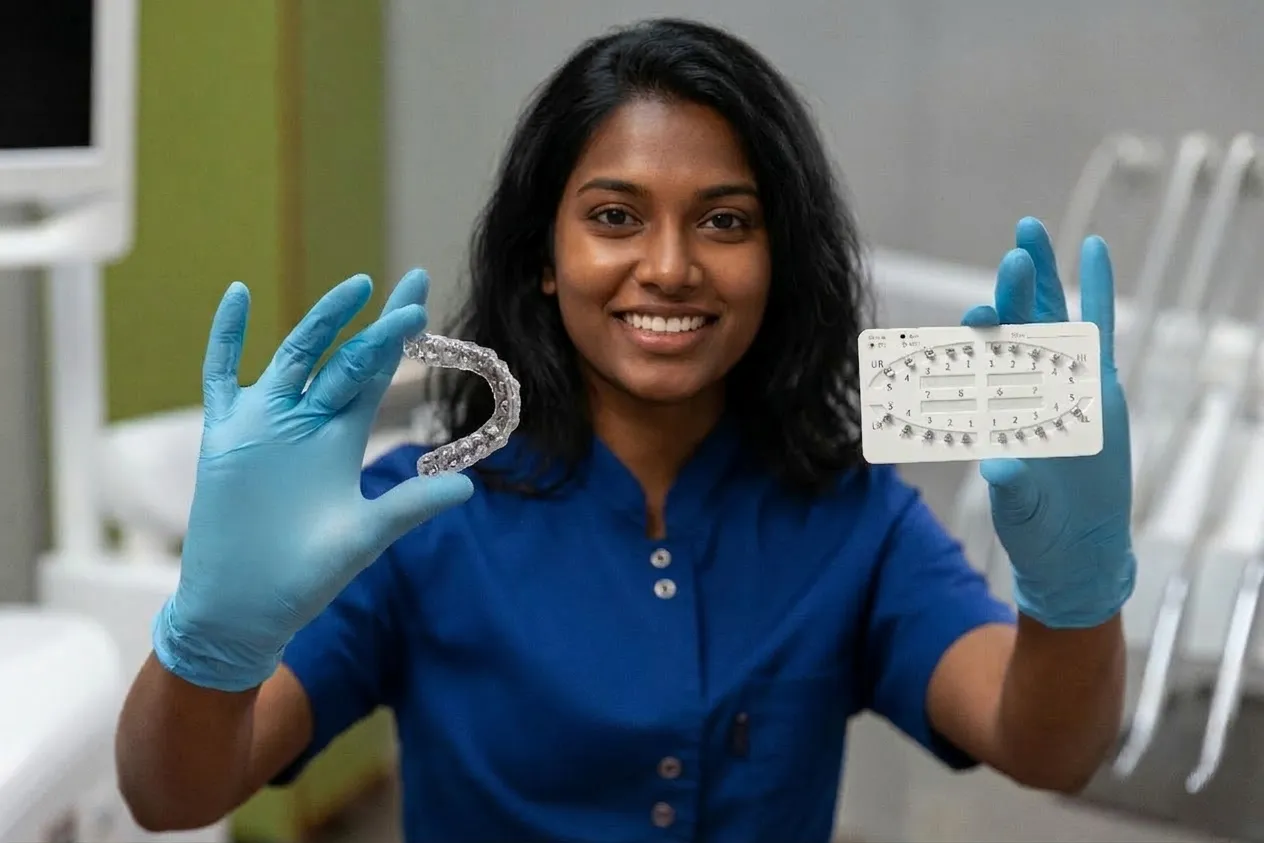
After aligner treatment is completed, patients must wear retainers.
Retainers help maintain the new tooth positions and prevent relapse.
Without retainers, teeth may gradually shift back toward their original position.
Most orthodontists recommend wearing retainers regularly, especially during the first year after treatment.
Modern digital systems allow patients to begin their orthodontic treatment journey easily.
Online booking platforms allow patients to:
Secure payment platforms such as payhere allow patients to confirm their appointments conveniently.
This digital system simplifies the treatment process and allows patients to begin their smile journey without unnecessary delays.
Clinical observations from Cayo Dental Hospital demonstrate predictable outcomes for clear aligner therapy when treatment is properly planned and monitored.
| Clinical Indicator | Observed Value |
|---|---|
| Aligner cases analysed | ~642 patients |
| Average patient age | ~29.8 years |
| Average aligners per arch | ~22 trays |
| Average total aligners per case | ~38 trays |
| Average treatment duration | ~10.6 months |
| Cases requiring refinement aligners | ~54% |
| Treatment completion rate | ~93% |
These observations are consistent with international orthodontic research showing that clear aligners can provide highly effective results for mild to moderate orthodontic corrections when patients maintain proper wear compliance.
WhatsApp us