
24/7 Emergency Phone
24/7 Emergency Phone
Clear aligners have become one of the most popular orthodontic treatments in modern dentistry. They provide a discreet and convenient way to straighten teeth without the need for visible metal braces.
However, one of the most common questions patients ask is:
While aligners can treat a wide range of orthodontic problems, they are not the best option for every case. Proper diagnosis and treatment planning are essential to determine whether clear aligners will work effectively for your dental condition.
This guide explains who is suitable for clear aligners, what problems they can fix, and when alternative orthodontic treatments may be recommended.
Clear aligners work best for mild to moderate orthodontic problems where teeth need controlled, gradual movement.
Candidates for aligner treatment typically have:
Modern digital orthodontic planning allows dentists to evaluate whether aligners can move teeth effectively before treatment begins.
At Cayo Dental Hospital, treatment planning involves digital scans and computer simulations to determine whether aligners are the most suitable option for each patient.
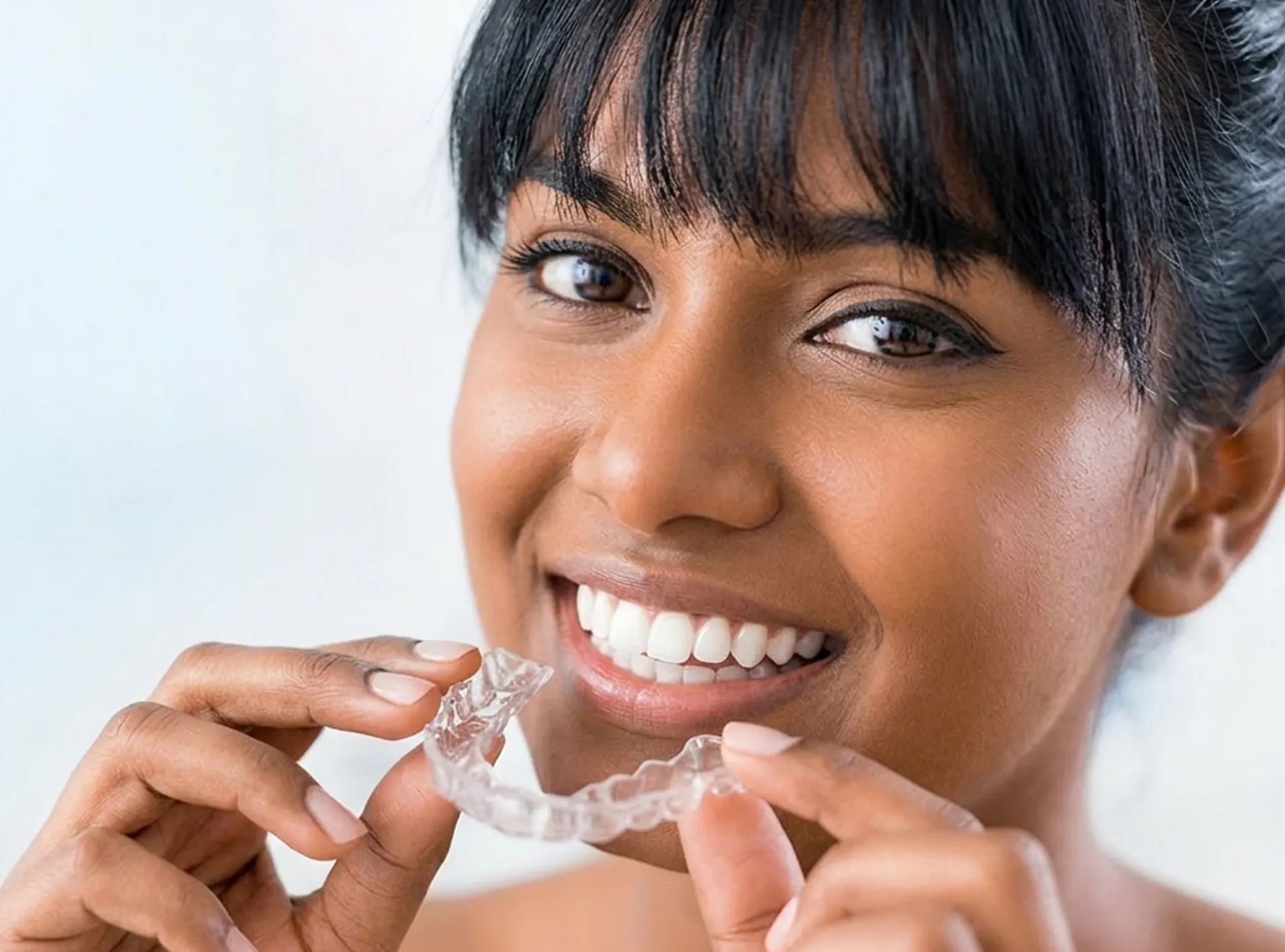
Clear aligners are capable of correcting many common orthodontic problems.
Crowding occurs when there is not enough space in the jaw for all teeth to align properly.
This can cause teeth to:
Clear aligners gradually create space by moving teeth into better alignment.
Mild to moderate crowding is one of the most predictable conditions treated with aligners.
Some patients have noticeable spaces between their teeth, known as diastema.
These gaps may occur due to:
Clear aligners can gently close these spaces by guiding teeth closer together over time.
An overbite occurs when the upper front teeth overlap excessively over the lower teeth.
Mild to moderate overbites can often be corrected using aligners through controlled tooth movement.
This correction improves both appearance and bite function.
An underbite occurs when lower teeth extend beyond the upper teeth.
Clear aligners can help correct certain mild underbite cases by adjusting tooth position and improving bite alignment.
More severe underbites may require additional orthodontic techniques.
Some bite problems affect how upper and lower teeth meet when the mouth closes.
A crossbite occurs when some upper teeth bite inside the lower teeth.
An open bite occurs when the upper and lower teeth do not touch when the mouth closes.
In many mild to moderate cases, clear aligners can correct these problems using carefully planned tooth movement.
Although aligners are highly effective for many orthodontic problems, they are not ideal for every case.
Some complex orthodontic problems may require traditional braces or combined orthodontic treatment.
These cases may include:
Braces can sometimes provide stronger mechanical control for these conditions.
An orthodontic assessment is required to determine the best treatment option.
Clear aligners rely heavily on patient compliance.
For treatment to be effective, aligners must be worn 20–22 hours per day.
Patients who frequently remove their aligners or forget to wear them may experience:
Therefore, aligners are most suitable for patients who are willing to follow treatment instructions consistently.
Clear aligners can be used by both teenagers and adults.
Aligners are often suitable for teenagers who have:
Because they are fixed appliances, braces continuously apply force without relying on patient compliance.
Many adult patients prefer aligners because they are:
In fact, adults now represent a large proportion of clear aligner patients worldwide.
There is no strict upper age limit for orthodontic treatment as long as the teeth and gums are healthy.
Determining aligner suitability requires careful diagnosis and treatment planning.
At Cayo Dental Hospital, the assessment process combines modern dental technology with clinical expertise.
The first step involves capturing a digital 3D scan of the patient’s teeth.
This scan replaces traditional dental impressions and allows dentists to create a precise digital model of the mouth.
Advanced orthodontic software is then used to simulate tooth movement and determine whether aligners can achieve the desired results.
Patients who live far from the clinic can use digital scanning centers to begin their treatment journey.
These centers allow patients to:
This system improves accessibility for patients across Sri Lanka.
Patients can schedule consultations easily through online booking systems.
Secure payment platforms such as payhere allow patients to confirm appointments and begin treatment with greater convenience.

Orthodontic treatment is an important investment in both oral health and personal confidence.
For many patients, clear aligners offer a comfortable, modern, and discreet solution for correcting dental alignment problems.
A professional consultation is the best way to determine whether aligners are suitable for your specific case.
Patients in the Central Province can consult with specialists at Cayo Dental Hospital to explore modern orthodontic treatment options.
Clinical observations from Cayo Dental Hospital demonstrate predictable outcomes for properly selected clear aligner cases.
| Clinical Indicator | Observed Value |
|---|---|
| Aligner patients analysed | ~642 cases |
| Average patient age | ~29.8 years |
| Average aligners per arch | ~22 trays |
| Average total aligners per case | ~38 trays |
| Average treatment duration | ~10.6 months |
| Cases requiring refinement aligners | ~54% |
| Treatment completion rate | ~93% |
These findings align with international orthodontic research showing that clear aligners are highly effective for mild to moderate orthodontic corrections when treatment is properly planned and patients maintain good compliance.
WhatsApp us