
Mon to Sun : 9AM To 8PM
Dental crowns and bridges are among the most commonly performed restorative dental treatments in the world. They are designed to restore damaged teeth, replace missing teeth, and restore normal chewing function.
When properly designed and maintained, dental crowns and bridges can last 10 to 15 years or even longer.
However, many patients experience problems such as crowns loosening, bridges falling off, or restorations breaking earlier than expected.
Most of these issues occur due to preventable mistakes during treatment or improper maintenance afterward.
Why crowns and bridges fail
The most common mistakes that cause restoration problems
Clinic-related factors that influence success
Patient habits that can shorten restoration lifespan
How Cayo Dental improves long-term success of dental restorations
A dental crown is a full-coverage restoration placed over a damaged or weakened tooth.
Crowns are commonly used when teeth are:
The crown protects the tooth and restores normal shape and function.
A dental bridge is used to replace one or more missing teeth.
The bridge works by anchoring an artificial tooth between two supporting crowns placed on neighboring teeth.
Bridges help restore:
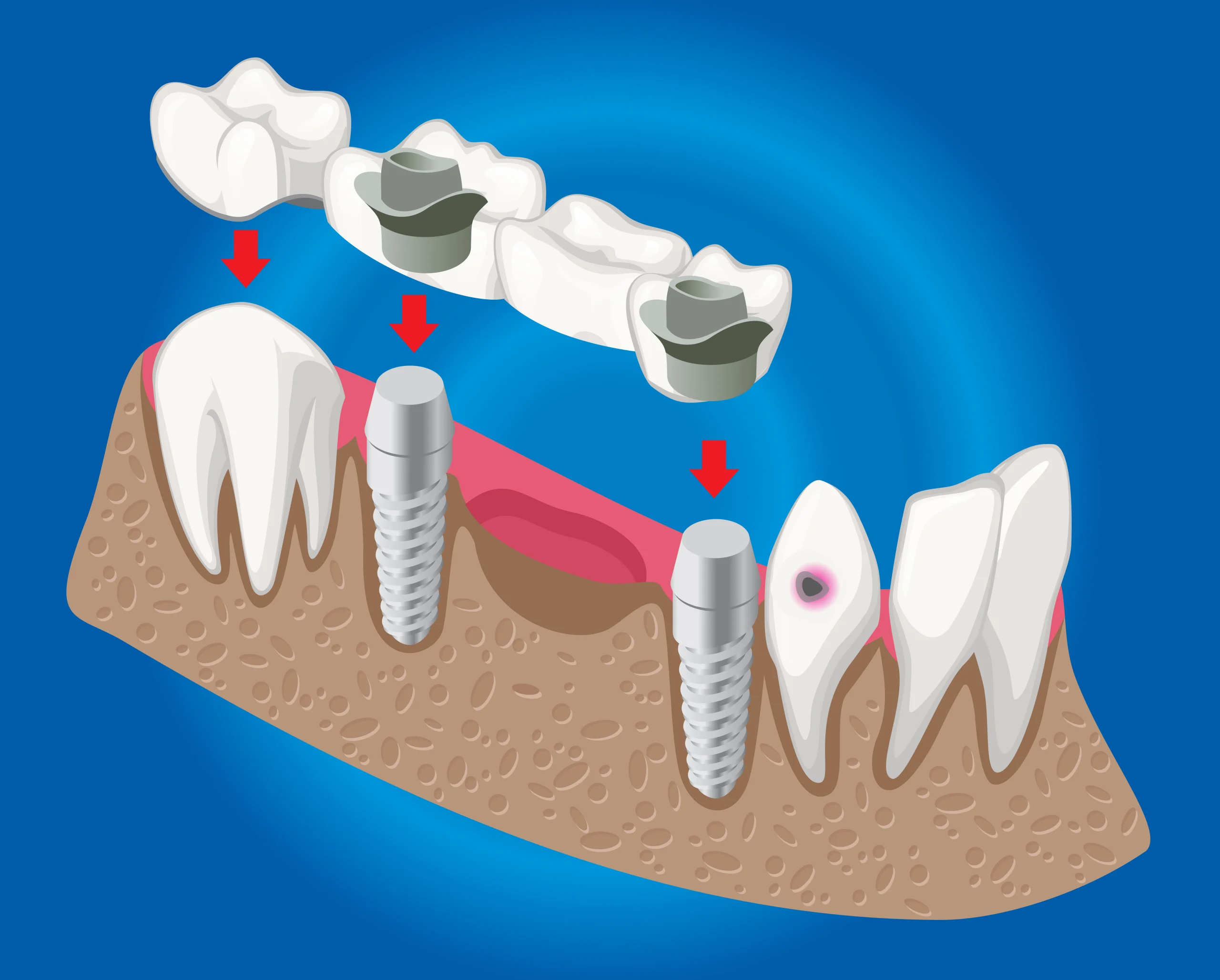
The expected lifespan depends on multiple factors.
Typical survival ranges are:
| Restoration Type | Average Lifespan |
|---|---|
| Dental Crown | 10 – 15 years |
| Dental Bridge | 8 – 12 years |
Some restorations can last 20 years or longer with proper care, while others may fail earlier due to clinical or patient-related factors.
Crown becoming loose
Bridge repeatedly falling off
Pain while biting
Food getting trapped around the restoration
Visible cracks or chips
Gum swelling near the crown
Bad odor from the area
Early evaluation often prevents major complications.
Both play an important role in long-term success.
Before placing a crown, the tooth must be reshaped.
Cayo Dental follows standardized preparation protocols to ensure:
Before placing a crown, the tooth must be reshaped.
If the impression is inaccurate:
Crown margins may not fit properly
Food accumulation occurs
Cement may dissolve faster.
If a crown or bridge receives excessive biting pressure:
Before final placement, our dentists perform:
to ensure balanced chewing forces.
Different crown materials have different strengths.
Common materials include:
| Material | Common Use |
|---|---|
| Zirconia | Strong posterior crowns |
| PFM (Porcelain Fused to Metal) | Durable bridges |
| Full Ceramic | Highly aesthetic front teeth |
Using an unsuitable material may reduce durability.
Material selection is based on:
Crowns are fabricated by dental technicians.
Framework strength is insufficient
Porcelain layering is uneven
Margins are poorly finished.
Even perfectly fabricated crowns can fail if proper care is not maintained.
Plaque accumulation can cause decay under crown margins.
This weakens the supporting tooth and eventually causes the crown to loosen.
Maintain proper oral hygiene:
Patients who grind their teeth can place excessive pressure on restorations.
This may cause:
Dentists may recommend:
Biting extremely hard foods may damage restorations.
Examples include:
Patients should avoid using teeth as tools.
Routine dental visits help detect problems early.
Without follow-ups:
Cayo Dental follows structured clinical protocols designed to improve restoration longevity.
These include:
Before treatment begins, patients receive:
Cayo Dental uses internationally recognized materials including:
Each restoration is evaluated for:
Patients receive guidance regarding:
Successful treatment depends on both clinical quality and patient care.
Early treatment helps prevent major complications.
Dental crowns and bridges remain one of the most reliable restorative treatments available today.
Successful restorations are always a shared responsibility between the dentist and the patient.
With proper care and structured treatment planning, crowns and bridges can provide many years of comfortable function and natural aesthetics.
WhatsApp us